Thursday, January 22, 2015

Fat Tails, The Precautionary Principle, and GMOs

I recently just wrote a blog post over at my applied econometrics blog (Econometric Sense) about fat tails and risk modeling. At the end of the post I mentioned Nassim Taleb's paper regarding the precautionary principle and GMOs (Jayson Lusk has a nice discussion of this on his blog as well and Nassim was a guest with Russ Roberts recently on EconTalk) as an example of one related application. If we boil down the concept of fat tails, we are basically talking about the probability or frequency of some extreme event being higher than what we would expect under 'normal' circumstances. Here is a nice anectdote from the models and agents blog:

"It’s 10am, your rottweiler has just chewed your Italian leather boots, your wife has burnt your pancakes and your mistress is on the phone proclaiming that “it’s over because, really, you’re pretty lousy in bed.” Oh yeah, and while you’re at it, your broker is leaving you a message that the stock market is crashing and you’ve lost a third of your savings. A bad hair day? No, my friend. You’re likely living in a fat tail!..."

So in his paper, Nassim and his coauthors work through some pretty complicated mathematics and based on definitions related to things like fat tails, fragility, ruin, harm, uncertainty etc. (in the appendix) conclude that what they refer to as a non-naive version of the precautionary principle should be applied to GMOs.

I probably need to read the paper again and spend more time in the appendix and maybe it will all sink in, its technical. In the EconTalk podcast one interesting way Nassim presents GMOs is through a Hayekian lense:

"Hayek effectively looked at nature as a format by which things--he sort of like thought of nature directly and indirectly and thought of the organic directly or indirectly as operating according to his principle of distributed knowledge. And technologies. And tinkering--away from that central planning mode....But let's say now, a Soviet planner, one that comes to nature. Aha--GMOs."

Reading between the lines, I think he wants to think (which I concur) of nature as a spontaneous order of checks and balances and that recombinant DNA techniques are like a top down planning approach that ignores or bypasses this process. But...biotechnology actually represents a small incremental genomic disruption in a system compared to a wholesale genomic disruption like conventional breeding or mutagenesis (used in organic methods as well). If a Hayekian model applies, I would think you could make the same argument against other methods of crop improvement as well.

Again, I think Nassim's idea is that the spontaneous order of nature provides checks and optimizes the 'use of knowledge' within the natural system, but GMOs circumvent this in a way similar to planning in an economic system does (which leads to negative outcomes). This seems to also come out in his paper: 

"Unlike GMOs, in nature there is no immediate replication of mutated organisms to become a large fraction of the organisms of a species. Indeed, any one genetic variation is unlikely to become part of the long term genetic pool of the population. Instead, just like any other genetic variation or mutation, transgenic transfers are subject to competition and selection over many generations before becoming a significant part of the population. A new genetic transfer engineered today is not the same as one that has survived this process of selection."

"The limited existing knowledge generally does not include long term testing of the exposure of people to the added chemical, even in isolation. The evaluation is independent of the ways the protein affects the biochemistry of the plant, including interactions among the various metabolic pathways and regulatory systems—and the impact of the resulting changes in biochemistry on health of consumers."

I must give Nassim credit, in the podcast he makes it a point that verbalizing these notions of risk and ruin is much less precise than doing it mathematically. But, if we know nothing about the math, if we assume it is completely correct, I would think that if his mathematical reasoning would argue for the precautionary principle in the case of GMOs (because of genetic disruptions circumventing the protections we get from nature's spontaneous order) then it would apply in the same way to more drastic genomic changes associated with mutagenesis or crossing with wild relatives. What would we have left to eat? 

The literature certainly indicates that GMOs may be the less benign approach to crop improvement, and to appeal to Hayek in another way, our knowledge of the specifics of genetic disruptions from biotechnology is much more precise and less assuming than conventional approaches.

Research on Genomic Disruptions

Batista R and others (2008). Microarray analyses reveal that plant mutagenesis may induce more transcriptomic changes than transgene insertion. Proceedings of the National Academy of Sciences of the United States of America 105(9): 3640–3645

Baudo MM, Lyons R, Powers S, Pastori GM, Edwards KJ, Holdsworth MJ, Shewry PR. (2006). Transgenesis has less impact on the transcriptome of wheat grain than conventional breeding. Plant Biotechnol J. 2006 Jul;4(4):369-80

See also: Biotechnology and Genetic Disruptions


Sunday, January 18, 2015

Greg Page on Globalism, Food, and Sustainability

This is an older article (from the Guardian) but has some good points by former Cargill CEO Greg page, that are consistent with other posts here before:

http://www.theguardian.com/sustainable-business/2014/dec/01/cargill-food-local-organic-agriculture

“This is Adam Smith and Hayek and Ricardo played out at very high speed,” says Page, citing classical liberal economists who argued that trade generates the prosperity much of the world enjoys today."
"Agriculture is “going to remain a very local business”, Page says, but if water and climate emissions are fully priced into the cost of food, it will likely become more global over time. One thing’s certain — it will never again be all-local. After all, aseconomist Russ Roberts has said: “We tried buying local once. It was called the Middle Ages.”

Wednesday, January 14, 2015

Greg Page on EconTalk- Channeling Hayek on Food and Agriculture

I have to say I absolutely recommend the recent EconTalk discussion between Russ Roberts and Greg Page (formerly CEO of Cargill):

http://www.econtalk.org/archives/2015/01/greg_page_on_fo.html 

"Greg Page, former CEO of Cargill, the largest privately-held company in America, talks to EconTalk host Russ Roberts about the global food supply and the challenges of running a company with employees and activity all over the world. Page talks about the role of prices in global food markets in signaling information and prompting changes in response to those signals. Other topics include government's role in agriculture, the locavore movement and genetically modified organisms (GMOs)."

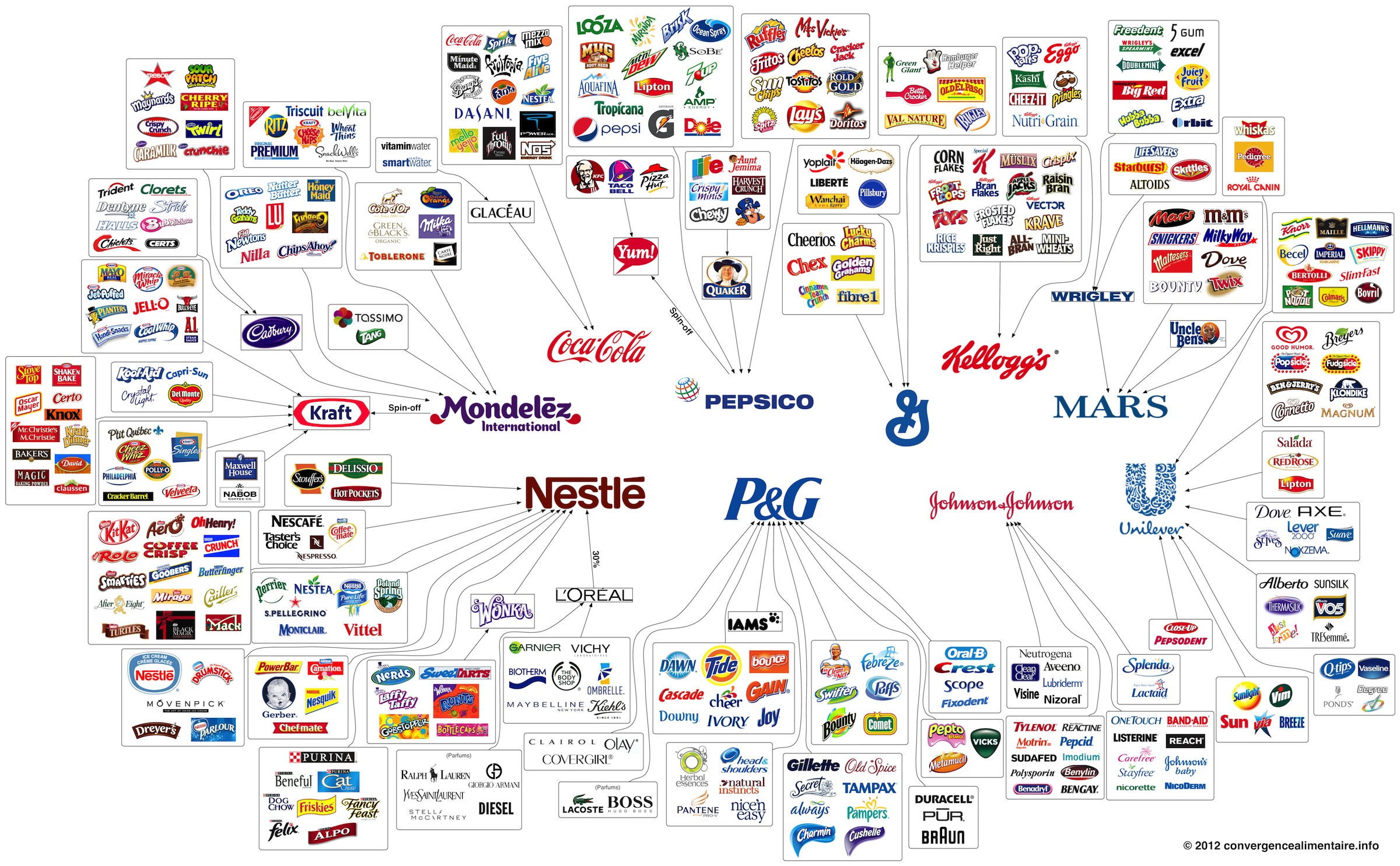
It is really interesting to me, and you have probably seen before via social media the charts that try to depict our food system as being controlled by only a few companies creating a vast array of products but an 'illusion of choice.' Critics often complain about 'Big Ag' controlling the food supply and pillaging the planet. But what I have always seen in this is actually the work of a spontaneous order of a complex network of modern family farms, biotechnology companies, food processors, and retailers that cooperate to deliver healthy and sustainable food to a growing global population. And in terms of sustainability, I have said previously that modern food supply chains, made possible by companies such as Cargill, ADM, and retailers like Wal-Mart, have not only allowed us to get foods cheaper than we can produce ourselves or source locally, but may have also helped to reduce our impact on the environment (see I, Chicken).

Greg has a strong understanding of what economists (particularly F.A. Hayek) refer to as a spontaneous order and how the use of knowledge in society is optimized via price discovery:

"I think an underappreciated aspect of food and agriculture certainly the interconnectedness of the various links in the supply chain but powerfully within that is the role of price in changing behavior in a positive way."

"In point of fact,that you watch as price signals very quickly go through the global agricultural landscape and cause players and each individual link to behave differently. And I've seen it in a very positive way. That after, for instance, the very recent result, severe weather in 2012 in the U.S. Midwest, ... And I think people miss that, and it's under-reported, that that signal went out and its speed of response all across the food supply chain to price signals is something that I would not have appreciated as I came out of college in spite of taking a few courses in microeconomics. ...in point of fact people miss the huge positive value they have in terms of food security. "

Also food security, comparative advantage and free trade vs. locavorism:

"One of the big threats to food security is the attempt by individual countries to define food security only in the context of their own citizens. That manifests itself in some cases--people try to start trying to grow crops for which they enjoy no comparative advantage. And so they take valuable acres, valuable rainfall, and force farmers, through tax policy or other means, to plant crops which don't really suit their situation, because they are simply not prepared to have trust-based trade with others who do enjoy advantage in that crop....Might make great local politics in a given country. But if that were practiced on a broad scale by a large number of countries, a lot of our food security would evaporate."

On farm policy:

"the best thing about the U.S. farm bill versus what existed before the last decade--so, what we call freedom to plant--that a farmer can sit down in February and look at his land and look at an array of price signals that he is receiving and determine what crops he should grow. If you go back 15 years ago, in many cases you had to farm to the legislation--that in order to maintain your base acres, and therefore your safety net, you were compelled to grow crops. Today you have in the United States an enormous amount of latitude to make the single best decision for you and your family as to what crop you will grow this year, given your soil moisture levels and a host of other signals. But to sit down at your kitchen table with your advisor or whatever and to make a 10-key calculator determination of what to plant in response to the market signals that you are getting. And so one of the big plusses, and it also has been in the last 15 years, this freedom to use your land according to market signals. Are those market signals shaped by things like biofuels policy? Absolutely. And so, what affects one crop, what affects the price of one crop will clearly affect the level of production for all other crops as well."

They also get into the promises of biotechnology:

"we could feed the world without GMOs; there are other practices that we could follow. So the idea that we are prisoners of this technology I think is something that should be dispelled. On the other hand, I don't think we should try that. I think if our water is precious, if our topsoil is precious, if we really care about the hydrocarbon footprint that we have in terms of the amount of cultivation that we need to carry out, that we should think very carefully about eliminating or demonizing genetic engineering."

Russ closes by asking Greg about his interest and education in economics:

Russ:  "I want to close by asking about your interest in economics and where it comes from, and how it affects your work life, to the extent that it does."

Greg: "Well, it affects it enormously. I see Cargill as a great laboratory of both macroeconomics and microeconomics; ... each year provides the opportunity to see many of the things that economic theorists would tell us actually play out on the kitchen tables of individual farmers with 10-key calculators responding to signals." 

"We see people ignore--to me, to their great disadvantage--the lessons of those three economists [Hayek,Smith & Ricardo] in terms of how they price water, in terms of how they charge for infrastructure. And so we get to see both the positive power of the messages that those economists talked about but we also get to see the damaging effect of ignoring them. And in very few cases to we see them as being wrong. That these are rules that at least in food and agriculture apply rather consistently and rather quickly."


Sunday, January 04, 2015

Religiosity, Beef, and the Environment

Some years ago in his widely popular book, the Armchair Economist, Steve Landsburg included an essay entitled 'Why I Am Not An Environmentalist.' (you can find a copy of the essay here).  He states:

"Economics is the science of competing preferences. Environmentalism goes beyond science when it elevates matters of preference to matters of morality....The underlying need to sacrifice, and to compel others to sacrifice, is a fundamentally religious impulse"

Take for instance recent headlines here and here indicating that the USDA and HHS are considering changing federal dietary guidelines that include recommendations for less beef based on so called environmental concerns instead of setting science based guidelines based purely health and nutrition. You might say, well, making a choice that is less energy intensive and one with a lower carbon footprint or involves fewer industrial chemicals or inputs might seem better for the environment.  However, when it comes to environmental sustainability, the absolute amount of energy we use, or pollution we create is not necessarily the relevant metric. Sustainable choices are those that allow us to consume today without compromising the consumption set of future generations. This is an inter-temporal optimization problem that considers both costs and benefits, and the optimal allocation is based on a comparison of marginal costs and benefits across time vs. absolute levels. 

Rigorous science might tell us with some level of uncertainty some measurable impact of dietary changes or CO2 emissions on future generations. But, to know if what we are getting in the future is larger than what we are giving up today, we have to discount future benefits (put them in today's terms). Then we can compare benefits and costs and talk about some optimal quantity of beef. (a big unknown in this is forecasting future impacts and getting the correct discount rate- see Doing Nothing: A science based policy prescription for climate change mitigation). It may be true that rigorous science tells us about the absolute level of energy use or emissions differs across an array of consumer products and production processes, but it does not tell us so much about relative trade offs across time. 

And exactly how do we pin down the 'costs' of less beef consumption today? Its more than not getting a double cheeseburger or steak the next time you eat. Its more than fewer head of cattle going to slaughter or lost revenue from grain sales next year or the year after.  Over the years huge investments have been made in technologies that have improved the efficiency of beef production, leading to significantly lower levels of water, feed, energy consumption, and pollution; especially greenhouse gas emissions. If people took these guidelines seriously, what does that mean for future investments and technological progress? It might turn out that slightly lower levels of consumption now could mean lower trend but absolutely higher levels of consumption of beef tomorrow (as the population grows), but without the potential green innovations that are on track today if current policy discourages those investments. That means tomorrow's cheeseburger comes with a larger environmental footprint than otherwise even if we are all eating less beef overall than we otherwise would have.  Already government policies and attitudes toward beef are impacting these trends. The recent stigmatization of green technologies like finely textured beef (ignorantly maligned as 'pink slime'), as well as the use of sub-therapeutic antibiotics and growth hormones is leading to beef going to market that is less green than it other wise would have been. 

How do you net out the overall impact of this? I have no idea, but that is the great thing about markets. As individuals, no matter how informed we think we are, our knowledge is limited and incomplete. The purpose of markets is to exploit the collective knowledge of millions (billions) of people in order to get the 'correct' levels of production and consumption.  Even if we didn't have to properly discount future benefits to compare to current costs, the limited knowledge of a few economists, scientists, and policy makers is not sufficient to determine the optimal quantity of any good in a society, even if they imagine they can design a mechanism that accounts for the gaps or externalities that they think current prices are missing the mark on. 

So, what are environmentalists and state and local governments to do in the face of lacking empirical evidence to support their personal beliefs about environmental policies and positions? They are certainly free to evangelize as private citizens. They can evangelize about how recycling and eating less beef is necessary because it serves some unquantifiable greater good, and they can even lay guilt trips on non-believers. They can even take up collections and ask for donations.  Unfortunately they do a lot more. They can actually force you to pay to support certain quasi-religous practices or in the case of recycling may even force you to participate in their rituals or pay a penalty (or should I say penance ).  Your tax money might be required to pay for recycling bins, or your local school might spend extra to add local food to its menus, promote rituals like 'meatless Monday,' or they may simply post nutritional 'commandments' that we are all encouraged to follow, and that will impact multitudes of government programs and personal choices.  As Landsburg says:

"....we face no current threat of having Christianity imposed on us by petty tyrants; the same can not be said of environmentalism. My county government never tried to send me a New Testament, but it did send me a recycling bin."

Advocates of these new proposals to eat less beef might invoke the name and prestige of science to support their position, but the science is just not very good. Ultimately they are asking us to take their recommendations on faith. To the extent possible, government agencies should stick to clearly defined roles, and to the extent possible should make policy as a matter of sound science, not faith in some unquantifiable pie in the sky greater good.

The Twisted Economics of Local Food

There was recently a really good article from Real Clear Politics requiring the fad/trend of buying local, 'Buying Local' is Really Bad Economics:

"Today, champions of the buy local movement often follow the same faulty economic reasoning: nobody wins unless somebody loses and "I'd rather have the person who looks like me, lives by me, and talks like me win, so I'm going to buy from him." What's sad about this thinking isn't just that it draws arbitrary moral distinctions between humans based on physical traits and location, but it undermines the openness to trade and commercial interaction that has made so many people better off."

The law of comparative advantage implies that things should be produced by those that can produce it with the lowest opportunity cost. For food this might imply utilizing more efficient and environmentally sustainable supply chains (created by companies like ADM, Cargill, Wal-Mart, CSXetc.). But economics also requires us to consider all benefits of a transaction, so even if a local product might have a higher price tag, or be more resource intensive to produce, it might have some unique intrinsic value (like the superior taste of a local beer) that outweighs these other concerns. The article itself is controversial because it implies that sometimes the 'intrinsic' value of buying local for the sake of buying local (a fad) can take on an elitist tone, impoverishing disadvantaged workers (often different races and cultures) in developing countries, and possibly impose greater costs to the environment just to satisfy the fad tastes and preferences of wealthy middle class Americans.

Environmentalists and social justice advocates are quick to condemn red meat or SUVs or other aspects of Western culture and consumerism, but some how give the 'buying local' movement a free pass. In fact, some even bend over backwards to argue that buying local is even actually better for the environment and promotes social justice, eliminates food deserts and makes healthy foods more affordable etc. Based on similar arguments, governments and school systems even utilize taxpayer dollars to source local food, or pass laws that promote consumption. That's pretty twisted economics.

But be clear, there is nothing wrong about having preferences toward local food or products. Economics has nothing to say about interpersonal comparisons of utility, and economists view each person as being the best arbiter of what's best for themselves. I have the opinion that the market will coordinate everyone's behavior to provide the optimal level of whatever types of food options individuals prefer, and local food certainly has a niche to fill. That's why I feel no sense of hypocrisy when I frequent the local farmer's market sporting a Monsanto cap. And, my favorite restaurants are local businesses that often source local produce and meats. If I had the time and resources, I might even start a beef operation that sources local beef to such places. But I would be in the wrong to force others to indulge my preferences through subsidies, taxes, or regulations.

Friday, January 02, 2015

Neu5Gc and Red Meat

There was a really nice article via Pork Network related to a recent study linking inflammation and cancer to a sugar molecule found in red meat called Neu5Gc.

http://www.porknetwork.com/news/murphy-sugar-coating-big-c

"James Paulson at The Scripps Research Institute in La Jolla, Calif., who is considered an expert on Neu5Gc and other similar compounds, suggested as much. “This report might stimulate entrepreneurial breeders to develop cattle stocks deficient in this nonhuman sugar,” he quoted in the story. Varki even suggested that the study might point the way toward developing an antidote to counteract the risk of cancer."

I have already seen some in social media proposing that this is another reason we should eat only local, organic, or grass fed meat if we are going to eat red meat at all. Red meat often gets a bad rap because all sorts of products fall under the umbrella of 'red meat.' However, I wonder if most people and most studies distinguish healthy meat choices (like the 29 cuts of lean beef that provide comparable levels of saturated fats + loads more nutrients than an equivalent serving of boneless skinless chicken). 

Even if the results are replicated and causal connections are actually established in human health, additional research would have to confirm that production practices can influence Neu5Gc levels before we can make any claims that organic/natural/hormone free/antibiotic free/local sources are better in this regard. The more likely scenario I think is that proposed by the pork writer above, and that  the real impact of this research will be played out in modern livestock production systems and breeding programs that use advanced techniques (i.e. quantitative genetic applications such as QTL/MAS) or who knows even some of the first commercially viable animal biotech applications accepted by consumers as beneficial to human health. 


Wednesday, December 31, 2014

Stacking Technology In Stockers Adds Up To More Pounds | Stocker/Backgrounders content from BEEF Magazine

This equates to a lower carbon footprint and improved sustainability. All market driven. Good for the environment, the producer,and the consumer. 

"Cattle receiving an ionophore either gain more on the same amount of feed or gain the same on less feed," Sawyer explains. "Generally speaking, with stocker calves on pastures of reasonable quality, we expect an increased rate of gain of 8%-12%, so maybe an extra 20-25 lbs. in a typical turn of stocker calves."

Monday, December 22, 2014

Big Data + Genomics ≠ Your Grandparent's Monoculture

Recently there was a really nice article in the NYT about how big data is being leveraged in the ag industry, Working the Land and the Data. There were some really great observations made in the article:

“we’ve got sensors on the combine, GPS data from satellites, cellular modems on self-driving tractors, apps for irrigation on iPhones...Tom Farms has genetically modified crops, cloud-computing systems and possibly soon drones, if Mr. Tom does not go with lasers on low-orbit satellites. All of these items will be sending their data for analysis on the cloud-computing systems that Tom Farms rented from Monsanto and other companies...Brent Schipper takes data readings from his combine every three seconds”

This certainly illustrates the volume, variety, and velocity of  big data I have previously discussed at my data analytics blog EconometricSense. And utilization of this data appears to have a payoff:

"better uses of data analysis have raised his return on investment to 21.2 percent, from 14 percent"

But there was some brief commentary contained in that article that I think could use some additional reflection:

"And there is another risk. There is an incentive to grow single crops to maximize the effectiveness of technology by growing them at the largest possible scale. Farmers with diverse crops and livestock would need many different systems. Smaller farmers without technology could also grow one crop, but they would not capture most of the gains."

This basically sounds like raising a concern about incentives for what some refer to as 'monoculture', or raising large acreages planted to single crops. Some are concerned about this because its like putting all of your eggs in one basket, for instance if there are environmental, pest, or pathological stresses that affect a single variety, then losses would be much greater than you might experience in a more diversified operation. There has always been a concern about market incentives reducing diversity in agricultural production, however, as I have mentioned before these concerns (about market incentives) may be somewhat exaggerated. In fact market forces can tend to be a driver of key aspects of diversity in agriculture.

In addition, one of the primary reasons that companies like John Deere and Monsanto are so interested in Big Data, is that there is money to be made in crop diversification. As I have mentioned before (See Agritalk Discussion of the impact of big data, biotechnology, and genomics on seed choice):

"the disruptions of new technology, big data and genomics (applications like FieldScripts, ACRES, MyJohnDeere or the new concept Kinze planters that switch hybrids on the go etc.) will require the market to continue to offer a range of choices in seeds and genetics to tailor to each producer's circumstances of time and place. There are numerous margins that growers look at when optimizing their seed choices and it will require a number of firms and seed choices to meet these needs as the industry's focus moves from the farm and field level to the data gathered by the row foot with each pass over the field."

(see also: What does the farmer say about seed choices)

"That's also why the market has driven companies to treat hybrid selection like a 'big data' problem and they are developing multivariate recommender systems as tools to assist in this (like ACRES and FieldScripts). The market's response to each individual producer's unique circumstances of time and place also ensures continued diversity of crop genetics planted."

The point is, as big data drives more diversity into every seed planted in every acre across every field, we may possibly begin to mitigate some of the risks and concerns traditionally associated with monoculture. So it is true, when you look across row after row and see only corn, you might technically call it 'monoculture' but its not your grandparent's monoculture.

See also:

Big Ag Meets Big Data (Part 1 & Part 2)
Big Data- Causality and Local Expertise are Key in Agronomic Applications
Big Ag and Big Data-Marc Bellemare
Other Big Data and Agricultural related Application Posts at EconometricSense


Saturday, August 16, 2014

Untested Unlabeled Genes in Your Food: It's Your Right to Know

The article linked below gives some interesting context that helps us to understand partly why the scientific consensus on GMO foods is that the insertion of specific genes into a plant pose no substantially differential risk to human health. We know that genomic disruptions from biotechnology are dwarfed by those caused by the millions of unknown and uncharacterized genes introduced into conventional and organic foods by hybridization, and crossing with wild relatives. (Or even through the use of radiation or mutagenic chemicals used in accordance with USDA organic standards). The numerous toxins whose genes are hidden betwixt sequences of thousands of DNA  base pairs have all along been much more of a threat than the very few and specific well known Bt and glyphosate resistant genes we have inserted in the staple crops we eat every day. 


Saturday, June 14, 2014

Antarctic Melt And Calls For Action | On Point with Tom Ashbrook

http://onpoint.wbur.org/2014/05/20/antarctic-melt-carbon-tax

Ashbrook asks, if the market were the answer and not a carbon tax, then why aren't we seeing anything from the market? And that is the issue, we could have said the same thing about mail and parcel delivery before email and UPS, and who saw google, Wikipedia, and Netflix on the horizon? The hybrid cars, wind farms, and solar seem like obvious solutions that the government has poured lots of money into. But the market's solution will not be so blatant and obvious as a government tax or subsidy, and Ashbrook's question will never have an obvious answer. Modern hybrid corn with no subsidy or tax for instance has done more to combat climate change than hybrid cars in the US.

Thursday, June 05, 2014

The Oregon GMO Ban: Who is really harming who?


“Was the government to prescribe to us our medicine and diet, our bodies would be in such keeping as our souls are now” - Thomas Jefferson Notes on the State of Virginia

This past May two counties in Oregon voted to ban the production of GMO crops. Was this good policy?

For a moment let’s sidestep the fact that modern molecular applications of crop improvement are just as safe if not safer than conventional and organic methods.  Let’s also forget that using a democratic process to override other people’s choices may not be the optimal strategy for making the most of imperfect information and limited resources.

Often, this law is discussed in the context of property rights, and rightly so:

“This local effort is important because it’s a way for local growers to protect their property rights from genetically engineered pollen contaminating their seed crops.”
-Ivan Maluski, Friends of Family Farmers

The assignment and protection of property rights is an important role of government, and definitely serves a key function in dealing with what economists refer to as negative externalities, and what most people would think of when they think of nuisances or environmental pollution.  However, the GMO bans represent a very narrow and restrictive assignment of property rights.

Property Rights and Externalities

Basically a negative externality occurs when  a second party is harmed from an activity without their consent or compensation. In the context of the Oregon law, we might view genetic contamination as a negative externality.  In these cases, the principle of polluter pays is often the basis used to require polluters to either stop their activity, pay a fine, or perhaps levy a tax related to the level of pollution.  However, in 1960 economist Ronald Coase brought new insight in his Journal of Law and Economics paper “The Problem of Social Cost.”  Coase stated that in many cases, the issue of pollution or negative externalities was in fact reciprocal.  This can easily be understood in the context of the Oregon case. While banning GMOs certainly protects organic and conventional producers from the harms of cross-pollination it reciprocally imposes significant harm on most family farmers by limiting their ability to grow food in a way that is both profitable and sustainable.  The question becomes, who may harm who?

Put another way, who should get the right to grow the kind of crops they want? The answer is that the right should be assigned to the party that values it the most. According to what has come to be known as the Coase Theorem, the initial assignment of rights does not matter. With clearly defined property rights, the optimal level of GMO vs. non-GMO crops planted as well as optimal levels of cross-pollination can be determined through cooperative processes.  Of course in this case, we may not be assigning physical rights to property so much as we are assigning liability.

 If liability goes to the organic producers, and they want to restrict the planting of GMO crops, then they have to find a way to compensate GMO growers to reduce planting . If liability falls on GMO growers and the economic and environmental benefits of growing GMO crops exceeds the value that organic producers place on uncontaminated crops, then GMO growers can pay for damages (or buy insurance for such purposes), or compensate organic producers for shifting their crops to another location. They may also alter their GMO planting decisions in highly susceptible areas.

The assignment of property rights and the potential for bargaining results in behavior that is changed or altered to account for the negative impact our choices have on others, regardless of who holds the rights. This is the essence of what is known as the ‘Coase Theorem and sets a standard of morality and efficiency that the Oregon law falls tragically short of meeting and in fact egregiously preempts.

Positive Externalities

Positive externalities occur when one or more parties engage in some activity and actually benefit another party without getting compensated for it.  An example of a positive externality is the concept of herd immunity that can occur when most people are vaccinated for things like measles.  Government funding of vaccination programs is often justified on the grounds of positive externalities. An unintended side effect of the Oregon law banning GMOs is the elimination of positive externalities associated with the planting of GMO crops. Research has shown that genetically modified crops have improved the genetic diversity of beneficial pest populations and have provided external pest protection benefits to non-gmo crops worth billions of dollars annually. In addition, biotechnology has contributed to significant reductions in greenhouse gas emissions and reduced the use of toxic chemicals and pesticides.  The Oregon laws eliminate all of these positive externalities associated with GMO crops in effect harming organic producers and all consumers.

Are these options practical or realistic? Nothing I could put in print likely would be. Policy makers and economists are not in a situation to know exactly all of the margins that individuals consider in their decision making and the options available, which is another flaw in the Oregon laws which make this assumption.  Some assignment of property rights or liability that accommodates a cooperative space for individuals to live their lives would be superior to both no law at all, or one as draconian as the two counties in Oregon have adopted.

References:

The Problem of Social Cost. R. H. Coase. Journal of Law and Economics, Vol. 3 (Oct., 1960), pp. 1-44

Areawide Suppression of European Corn Borer with Bt Maize Reaps Savings to Non-Bt Maize Growers. Science 8 October 2010:Vol. 330. no. 6001, pp. 222 - 225 DOI: 10.1126/science.1190242W. D. Hutchison,1,* E. C. Burkness,1 P. D. Mitchell,2 R. D. Moon,1 T. W. Leslie,3 S. J. Fleischer,4 M. Abrahamson,5 K. L. Hamilton,6 K. L. Steffey,7, M. E. Gray,7 R. L. Hellmich,8 L. V. Kaster,9 T. E. Hunt,10 R. J. Wright,11 K. Pecinovsky,12 T. L. Rabaey,13 B. R. Flood,14 E. S. Raun15

Communal Benefits of Transgenic Corn. Bruce E. Tabashnik  Science 8 October 2010:Vol. 330. no. 6001, pp. 189 - 190DOI: 10.1126/science.1196864

Genetically Engineered Crops: Has Adoption Reduced Pesticide Use? Agricultural Outlook ERS/USDA Aug 2000

GM crops: global socio-economic and environmental impacts 1996- 2007. Brookes & Barfoot PG Economics reportOctober 2010:Vol. 330. no. 6001, pp. 189 - 190DOI: 10.1126/science.1196864

Greenhouse gas mitigation by agricultural intensification Jennifer A. Burneya,Steven J. Davisc, and David B. Lobella.PNAS  June 29, 2010   vol. 107  no. 26  12052-12057

Comparison of Fumonisin Concentrations in Kernels of Transgenic Bt Maize Hybrids and Nontransgenic Hybrids. Munkvold, G.P. et al . Plant Disease 83, 130-138 1999.

Indirect Reduction of Ear Molds and Associated Mycotoxins in Bacillus thuringiensis Corn Under Controlled and Open Field Conditions: Utility and Limitations. Dowd, J. Economic Entomology. 93 1669-1679 2000.

A Meta-Analysis of Effects of Bt Cotton and Maize on Nontarget Invertebrates. Michelle Marvier, Chanel McCreedy, James Regetz, Peter Kareiva Science 8 June 2007: Vol. 316. no. 5830, pp. 1475 – 1477

"Why Spurning Biotech Food Has Become a Liability.'' Miller, Henry I, Conko, Gregory, & Drew L. Kershe. Nature Biotechnology Volume 24 Number 9 September 2006.


Saturday, January 04, 2014

LETTERS: Farm Bureau speaks for farmers everywhere | Opinion | The Free Lance-Star | December 23rd, 2013

This farmer may not have ever read "The Use of Knowledge in Society" but they get it: 

"I know my farm much better than a bureaucrat trying to apply blanket solutions to thousands of farms that vary greatly in size, type, soil capacity and a hundred other ways. Voluntary practices, encouraged by some cost share and technical assistance have proved effective in reducing runoff from farms. Now much of that effort will be wasted in forms, paperwork, deciphering regulations and similar nonsense that fulfills some bureaucratic goal but doesn't help the bay at all."


Tuesday, December 17, 2013

Agritalk Discussion of the Impact of Biotechnology, Big Data, and Genomics on Seed Choice

On December 17th I was invited on AgriTalk with Mike Adams to discuss the impact of biotechnology on farmers' choices in seed options. Agricultural markets in the seed industry (as imperfect as they may be when we compare them to unrealistic and idealistic standards) function as they should by solving the knowledge problem related to seed choices and technology. This will only be enhanced with the convergence of big data, genomics, and biotechnology. That is truly the social function of markets and prices.  Even if a single corporation controlled all of the IP related to existing biotech traits, the disruptions of new technology, big data and genomics (applications like FieldScripts, ACRES, MyJohnDeere or the new concept Kinze planters that switch hybrids on the go etc.) will require the market to continue to offer a range of choices in seeds and genetics to tailor to each producer's circumstances of time and place. There are numerous margins that growers look at when optimizing their seed choices and it will require a number of firms and seed choices to meet these needs as the industry's focus moves from the farm and field level to the data gathered by the row foot with each pass over the field. The concerns related to monoculture and monopoly in the seed industry are largely overrated when these factors and trade offs are considered.

The audio is available in the archives (Dec 17) below via Farm Journal Media or iTunes (@33:00) (play in browser): https://itunes.apple.com/us/podcast/agritalk-december-17-2013/id619537283?i=215613895&mt=2  

See also: What does the Farmer Say About Seed Choices- Channeling Hayek.
Big Ag Meets Big Data: Part 1 & Part 2


Wednesday, December 11, 2013

What does the farmer say...about seed choices? (Channeling Hayek)

I recently came across the following article in the Huffington post: Do Farmers Have Choices? by Jenny Dewey Rohrich who also has a very nice blog replete with some very good ag photography. The article discusses seed and hybrid selection issues based on actual responses from real producers. The responses are what I expected, of course they have a choice and its a tough one!

I've seen the concern out there that many people think big agribusiness and biotech companies have a gun (figuratively) to growers heads when it comes to seed choices and that justifies government interventions like labeling, more regulation, or bans on GMOs . As this article states, seed choice is a very complicated decision that involves many variables and traits. From the article, one producer describes their decision process that involves comparisons of hundreds of varieties from hundreds of corporations and mom and pop seed companies:

"First we go through the list of potential seed candidates every year comparing conventional, GM, and hybrids. Then we compare yields, cost per acre to keep plants alive, and then we throw in the variables: drought, flood, extreme heat or cold, early frosts, and untimely rains during harvest."

 The choice of what crops we should grow, how they should be produced in terms of management practices and technology, and ultimately the variety of foods we choose to consume is an example of what economists refer to as the knowledge problem. While it might be possible to patent a given trait or hybrid, no one company can get too firm a grasp on this knowledge problem, regardless of their market share in the seed industry today. (not to mention, no government agency would have sufficient knowledge either). Given the vast array of considerations in seed choice and management practices, there is always going to be an incentive for some supplier to cater to the unique needs of individual producers, as advances in genomics and technology drive production not farm by farm or acre by acre but inch by inch. That's also why the market has driven companies to treat hybrid selection like a 'big data' problem and they are developing multivariate recommender systems as tools to assist in this (like ACRES and FieldScripts). The market's response to each individual producer's unique circumstances of time and place also ensures continued diversity of crop genetics planted. Referring to the great article Blake Hurst recently wrote in The American, the synergy between genomics, big data, and modern technology in agriculture is amazing!

Another great comment from a seed dealer in the article states "Seed companies, including ours, bring to market those varieties and traits that farmers want to buy" and the author's statement "Farmers drive the demand for the seed that is researched, bought, and sold" pins down exactly how agricultural markets in the seed industry function as they should by solving the knowledge problem related seed choices and technology. That is truly the social function of markets and prices, as imperfect as they may be when we compare them to unrealistic and idealistic standards. The concerns related to monoculture and monopoly in the seed industry are largely overrated when these factors and trade offs are considered.

The comments made in the Huffington post article are based on a survey of farmers. Its likely not scientific, and my comments above are based on my own industry knowledge and personal experiences from past years working as a crop consultant as well as a few producers I know. I'd be curious to know what the mindset of a larger number of producers is on this issue.

See also my previous posts:  Big Ag Meets Big Data Part1 & Part 2 and  Monsanto Antitrust Case

Friday, December 06, 2013

Our Stake in GHG Emissions

I recently saw this tweet (which I'll keep anonymous out of respect of the author):

"We all cause greenhouse gases to be released into the sky; but most of us do not have special interest in continuing to do so"

I'm not sure that is true. Of course, it's true we don't all have special interests in the context of a team of lobbyists and a corporate rent seeking apparatus. But we all do have an interest in GHGs being released into the sky. We all enjoy refrigeration, air conditioning, transportation, fire, police, and rescue services, as well as telecommunications, personal computing, smartphones, iPads, google wickipedia, Instagram etc. Access to all of these goods and services at affordable prices involve trade offs related to GHG emissions and we all have direct interests in their continual release into the atmosphere, and indirect but strong interests in the 'special' interests that work to keep that path as clear and unobstructed as possible.

Thursday, November 28, 2013

A Note on Information Asymmetry (Cafe Hayek Reblog)

http://cafehayek.com/2013/11/a-note-on-information-asymmetry.html

A nice quote.

"Perhaps the greatest information asymmetry of all is the stark difference between the enormously deep, rich, and personal knowledge that each individual has of himself or herself and the necessarily sparse and inadequate knowledge that government officials have of each of the individuals over whom they are empowered to rule"

In the comments, the discussion turns to GMO labeling, for which this readily applies.

Wednesday, September 18, 2013

Positive Externalities of Biotech Bt Traits on Non-Biotech Crops and Non Target Insects

The following articles highlight positive externalities associated with Bt corn and cotton production :

Communal Benefits of Transgenic Corn. Bruce E. Tabashnik  Science 8 October 2010:Vol. 330. no. 6001, pp. 189 - 190DOI: 10.1126/science.1196864

 "Bt corn planted near non-Bt corn can provide the unmodified plants with indirect protection from pests"

Areawide Suppression of European Corn Borer with Bt Maize Reaps Savings to Non-Bt Maize Growers. Science 8 October 2010:Vol. 330. no. 6001, pp. 222 - 225 DOI: 10.1126/science.1190242W. D. Hutchison,1,* E. C. Burkness,1 P. D. Mitchell,2 R. D. Moon,1 T. W. Leslie,3 S. J. Fleischer,4 M. Abrahamson,5 K. L. Hamilton,6 K. L. Steffey,7, M. E. Gray,7 R. L. Hellmich,8 L. V. Kaster,9 T. E. Hunt,10 R. J. Wright,11 K. Pecinovsky,12 T. L. Rabaey,13 B. R. Flood,14 E. S. Raun15,

"Cumulative benefits over 14 years are an estimated $3.2 billion for maize growers in Illinois, Minnesota, and Wisconsin, with more than $2.4 billion of this total accruing to non-Bt maize growers."

A Meta-Analysis of Effects of Bt Cotton and Maize on Nontarget Invertebrates.Michelle Marvier, Chanel McCreedy, James Regetz, Peter Kareiva Science 8 June 2007: Vol. 316. no. 5830, pp. 1475 – 1477


Wednesday, September 04, 2013

The Economics of Local Food

I am very excited to see that on September 11,2013 the WKU  BB&T Center for the Study of Capitalism is hosting Pierre Desrochers (also a Mercatus Institute Fellow), co-author of The Locavore’s Dilemma: In Praise of the 10,000-Mile Diet.

Pierre Desrochers discusses his book here at this Cato book forum. 

I've written about local food before at my Economics Principles and Applications blog, but I thought I'd re post here. (also see more recent local food and sustainability related posts here.)

”It is a maxim of every prudent master of a family, never to attempt to make at home what it will cost him more to make than to buy.” - The Wealth of Nations

This is tied to the concept of comparative advantage and gains from specialization and trade, which lead to an increase in the size of the ‘economic pie’ which can be used to make everyone better off. Modern food supply chains, made possible by companies such as Cargill, ADM, and retailers like Wal-Mart, have helped to reduce our impact on the environment.

Below are some excerpts of articles related to local food:

The Inefficiency of Local Food
 Steve Sexton
11/14/2011

http://www.freakonomics.com/2011/11/14/the-inefficiency-of-local-food/

Forsaking comparative advantage in agriculture by localizing means it will take more inputs to grow a given quantity of food, including more land and more chemicals—all of which come at a cost of carbon emissions.....In order to maintain current output levels for 40 major field crops and vegetables, a locavore-like production system would require an additional 60 million acres of cropland, 2.7 million tons more fertilizer, and 50 million pounds more chemicals. The land-use changes and increases in demand for carbon-intensive inputs would have profound impacts on the carbon footprint of our food, destroy habitat and worsen environmental pollution.

It’s not even clear local production reduces carbon emissions from transportation. The Harvard economist Ed Glaeser estimates that carbon emissions from transportation don’t decline in a locavore future because local farms reduce population density as potential homes are displaced by community gardens. Less-dense cities mean more driving and more carbon emissions. Transportation only accounts for 11 percent of the carbon embodied in food anyway, according to a 2008 study by researchers at Carnegie Mellon; 83 percent comes from production.
 

The locavore’s dilemma 
Urban farms do more harm than good to the environment

Edward L. Glaeser
http://articles.boston.com/2011-06-16/bostonglobe/29666344_1_greenhouse-gas-carbon-emissions-local-food/2
Berkeley graduate student Steven Sexton estimates that an American switch to more local corn production would require 35 percent more fertilizer and 22.8 percent more energy....But the most important environmental cost of metropolitan agriculture is that lower density levels mean more driving. Today, about 250 million Americans live on the 60 million acres of this country that are urban — which is about four people per acre....If halving densities also doubled distance to the metropolitan area center, this would add an extra 44 gallons of gas annually. Together, the increased gas consumption from moving less than a tenth of agricultural farmland into metropolitan areas would generate an extra 1.77 tons of carbon dioxide per year, which is 1.77 times the greenhouse gases produced by all food transportation and almost four and a half times the carbon emissions associated with food delivery.


From Marginal Revolution: Food Miles

"How far your food travels matters a lot less than what kind of food it is, or how it was produced. According to a recent study out of Carnegie Mellon University, the distance traveled by the average American’s dinner rose about 25 percent from 1997 to 2004, due to increasing global trade. But carbon emissions from food transport saw only a 5 percent bump, thanks to the efficiencies of vast cargo container ships. Should we minimize our “music miles” and boycott bands on tour?"

Eating Local and Climate Change link from National Geographic ("Eating Local" Has Little Effect on Warming, Study Says. Mason Inman  National Geographic News April 22, 2008)

"Being a "locavore" and eating foods grown near where you live may not help the environment as much as you might think, according a new study.When it comes to global warming, focusing simply on where food comes from will make only a small difference, the study's authors say."

Cited research: Environ. Sci. Technol. 2008, 42, 3508–3513

"Despite significant recent public concern and media attention to the environmental impacts of food, few studies in the United States have systematically compared the life-cycle greenhouse gas (GHG) emissions associated with food production against long-distance distribution, aka “food-miles.” We find that although food is transported long distances in general (1640 km delivery and 6760 km life-cycle supply chain on average) the GHG emissions associated with food are dominated by the production phase, contributing 83% of the average U.S. household’s 8.1 t CO2e/yr footprint for food consumption. Transportation as a whole represents only 11% of life-cycle GHG emissions, and final delivery from producer to retail contributes only 4%. Different food groups exhibit a large range in GHG intensity;on average,redmeat is around 150% more GHG intensive than chicken or fish. Thus, we suggest that dietary shift can be a more effective means of lowering an average household’s food-related climate footprint than “buying local.”

Although the authors above seem to suggest dietary shifts away from meat consumption, it is important to not forget the huge strides in sustainability that are occuring in the livestock industry that is largely technology driven and a major reason that conventional modern food supply chains are in fact more sustainable.

See beef and livestock related citations in the post Sustainable Agriculture Bibliography  and the accompanying video for more details.

See also:

Food miles, Kowalski's and that steak on your plate
MPR News

"That steak you bought at the farmers' market from the family operation down the road might have taken more fuel to get to you than the rib-eye from a steer slaughtered in Kansas."

Read the article here.

The actual research is here.

Comparing the Structure, Size, and Performance of Local and Mainstream Food
Supply Chains


USDA Economic
Research
Report
Number 99
June 2010

"Transportation fuel use is more closely related to supply chain structure and size than to the distance food products travel. Products in local supply chains travel fewer miles from farms to consumers, but fuel use per unit of product in local chains can be greater than in the corresponding mainstream chains. In these cases, greater fuel efficiency per unit of product is achieved with larger loads and logistical efficiencies that outweigh longer distances."

See also this entry from the EconLog blog:

 The Locavore's Dilemma: Why Pineapples Shouldn't Be Grown in North Dakota

In this post four arguments related to local food are discussed:
1: Buying Local Foods is Good for the Local Economy
2: Buying Local Foods Is Good for the Environment
3: Local is Fresher and Tastier
4: Local Food is Healthier and Should be Served in School

The authors conclude:

"Economists are a diverse bunch, but we have a few core principles, two of which are that there is a balance of payments and that there are gains from trade. These universal principles are as timeless as the law of gravity. If politicians and activists proposed to suspend belief in gravity, physicists would not cower. They would resolutely defend reality. So should we."

Saturday, August 17, 2013

Diversity in Crop Production

Market forces accommodating producer demands for traits optimized for diverse conditions and environments and the risks they pose drive technological advances in biotechnology and plant breeding. 

Schap and young make this point in their 1999 Cato Journal article:

Enterprise and Biodiversity: Do Market Forces Yield Diversity of Life? David Schap and Andrew T. Young Cato Journal, Vol. 19, No. 1  (Spring/Summer 1999)

"At the root there appears to be a conflict between the efficiency of the market and the preservation of biodiversity. The conflict is real, however, only if the market is at odds with biodiversity. Does the market destroy biodiversity? We contend that it does not. Rather the market often can, and indeed does, provide biodiversity—both deliberately and as an unintended consequence of market forces. In the specific case of hybrid maize seed, we show that biodiversity is provided unintentionally both at the industry level and at the level of the individual firm. We explain that maize seed firms behave according to economic theories of monopolistic competition and optimal diversification, furnishing biodiversity as a fortuitous byproduct of their pursuit of profit."

Previous work in the journal Crop Science supports Schap and Young: 

''Diversity of United States Hybrid Maize Germplasm as Revealed by Restriction Fragment Length Polymorphisms.'' Smith, J.S.C.; Smith, O.S.; Wright, S.; Wall, S.J.; and Walton, M. (1992) Crop Science 32: 598–604

In addition to actual crop diversity, new technologies like Bt traits actually help improve the diversity of insect populations, as indicated in the following 2007 article in Science:

A Meta-Analysis of Effects of Bt Cotton and Maize on Nontarget Invertebrates.Michelle Marvier, Chanel McCreedy, James Regetz, Peter Kareiva Science 8 June 2007: Vol. 316. no. 5830, pp. 1475 – 1477

If we think of 'monoculture' and 'diversity' in a very strict and narrow sense, we might lead ourselves to believe that modern agriculture has serious problems. However, the real actions taken by risk averse producers that rely on a diverse portfolio of genetic assets to achieve narrow margins in a fast paced ever changing environment prove otherwise. In many ways, 'monoculture' is a myth. 


See also: 

''Hybrid Corn.'' Abelson, P.H. (1990) Science 249 (August 24): 837.

Thursday, July 18, 2013

I, Chicken


“I was really shocked when I bought my first ever whole chicken tonight. Five bucks? For a whole chicken? KFC charges five bucks for one breast and one wing. How can a farmer breed, hatch, raise, feed, house, butcher, package, and ship a chicken for five bucks? Blows my mind.”

This was a very insightful observation made by a friend of mine. The subject of economics in a lot of ways is just a collection of stories consisting of observations and insights like this. This particular insight speaks directly to the concepts of comparative advantage from Ricardo and specialization and trade from Adam Smith- read more about these economists at the Library of Economics and Liberty.

Because of the principle of comparative advantage,  you choose to buy the chicken from the retailer at $5 as opposed to raising it yourself or even sourcing it locally at a much greater cost in terms of money, time, and perhaps the environment.  Because of the principle of comparative advantage we often don’t raise most of our own food or make our own cars or many of our own clothes or even source most of these things locally either. The concept of comparative advantage and the associated gains from specialization and trade lead to an increase in the size of the ‘economic pie’ which can be used to make everyone better off. 

Getting a chicken at your local retailer for $5 is also a testament to the market’s ability to solve the the fundamental problem of economics, the knowledge problem. This is a problem that exists because the necessary information for allocating scarce resources does not exist in concentrated or integrated form, but is incomplete and dispersed among individuals. Through markets, prices bring all of this incomplete and dispersed information together in a coordinated manner, producing a ‘spontaneous order’ as described by economist F.A. Hayek.

 We get $5 chicken because a spontaneous order comprised of specialized farmers, feed and nutrition specialists, veterinarians, pharmaceutical companies, breeders, packers, processors, supply chain managers, and retailers all cooperate to bring healthy, sustainable, and affordable food to your table. Modern food supply chains, made possible by companies such as Cargill, ADM, and retailers like Wal-Mart, have not only allowed us to get foods cheaper than we can produce ourselves or source locally, but may have also helped to reduce our impact on the environment.  

Another way to think about the knowledge problem and the concept of a spontaneous order in relation to $5 chickens is to admit that no single person really knows how to make a chicken any more than a pencil, as illustrated so perfectly by Leonard E. Read in his famous essay ‘I, Pencil.’ Milton Friedman does a good job summarizing the essay in 2 minutes in the following You-Tube video: 


It is also important to recognize that $5 chicken owes a great debt to entrepreneurial driven technological change and economic growth, and this is truly mind blowing. As economist Robert Lucas said “once you start thinking about growth it's hard to think about anything else.”

Think, “I’Chicken.”